
One description, one connection
Explain what the door is doing, the approximate size, and whether it's residential or commercial, and we connect you with a local contractor who handles spring repair.
Serving Palm Bay, Florida & surrounding areas
Calls answered around the clock
Describe what the door is doing once and get connected with a local contractor serving Palm Bay and the Melbourne area who handles spring repairs for residential and commercial doors.
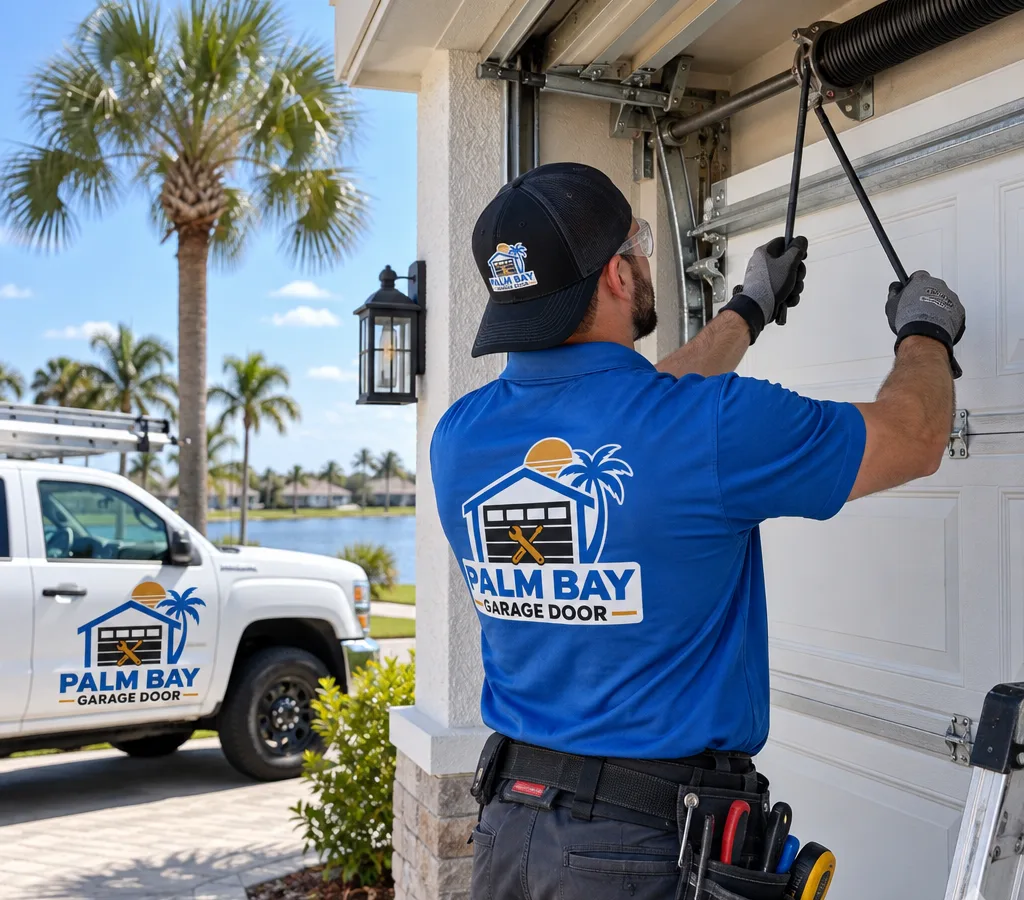
If you're searching for garage door spring repair Melbourne, the problem is usually the same: the door suddenly feels too heavy, won't open, drops hard, or the opener strains and stops. The springs are what counterbalance the weight of the door. When a spring breaks or loses tension, the door can't stay balanced, and everything else in the system starts working harder than it should.
A good spring repair starts with confirming what type of spring system you have and what failed:
In Palm Bay's coastal climate, metal hardware can corrode faster, and that corrosion can affect springs, cables, and bearing plates. A contractor will usually look beyond the broken spring itself because a spring failure often reveals other wear that can make the next cycle unsafe.
Many calls start with a homeowner saying, “My opener is broken.” Often the opener is reacting to an unbalanced door. If the door is heavy because the springs are weak or broken, the opener can trip a force setting, strip a gear, or burn out. Spring repair is frequently the first step toward getting the whole door operating normally again.
Palm Bay Garage Door connects you by phone with a local contractor who handles this work. You describe the door type, what you're seeing, and whether it's residential or commercial, and then you speak directly with the contractor about options and scheduling.
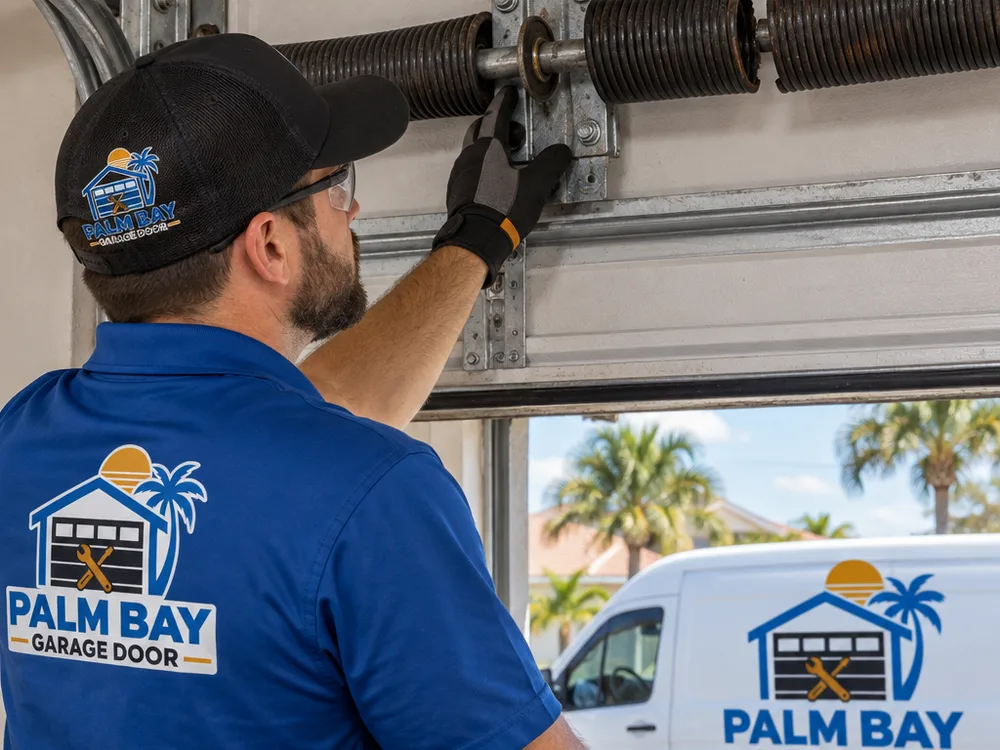
Explain what the door is doing, the approximate size, and whether it's residential or commercial, and we connect you with a local contractor who handles spring repair.
Commercial doors, high-lift setups, and standard residential doors use different spring configurations; the contractor can come prepared with the right hardware.
Contractors who work around Palm Bay and Melbourne see the effects of salt air and humidity on springs, cables, bearings, and bottom brackets.
A proper check includes spring type, cable condition, drum set-screws, bearing plates, and whether the door is correctly balanced by hand.
You talk directly with the contractor, hear their recommended fix, and decide whether to move forward.
The contractor identifies torsion vs extension springs, door height and construction, and checks whether one or two springs are used.
Before any winding or unwinding, the door is secured, the opener is disconnected, and the lift cables, drums, bottom fixtures, and bearings are inspected for wear or rust.
Correct spring sizing is based on wire size, inside diameter, and length. Springs are selected to match the door's weight so the door can be balanced and lifted smoothly.
The spring tension is adjusted so the door stays near mid-travel when lifted by hand. This balance reduces strain on rollers, hinges, tracks, and the opener.
After the door runs smoothly by hand, the opener is reconnected and settings are verified so the door closes properly and reverses as intended.
If the door won't lift, feels unusually heavy, or you see a gap in the spring coil, describe what you're seeing once and get connected with a local contractor who can take it from there.
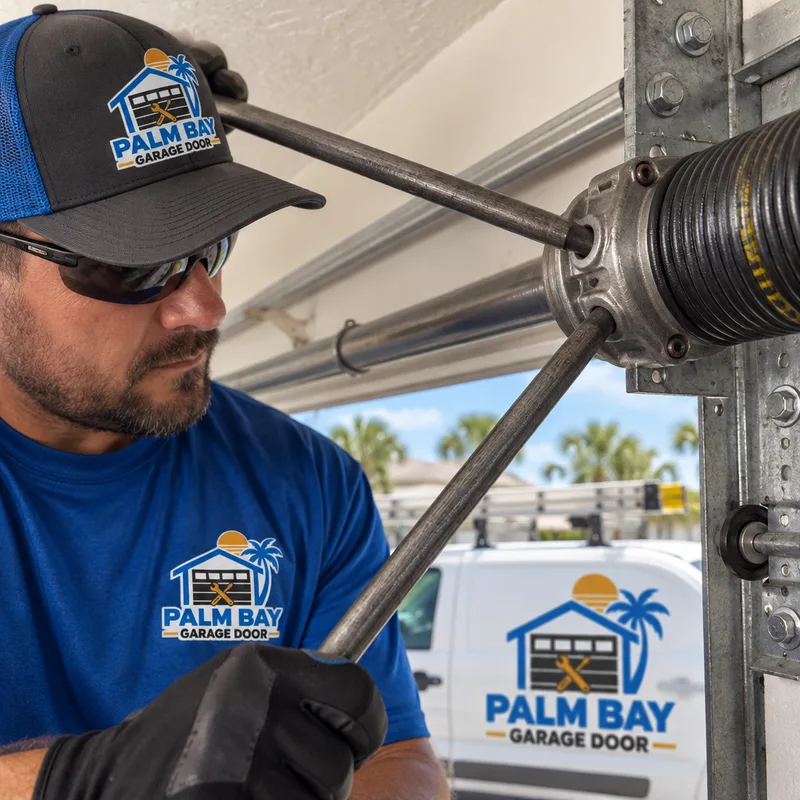
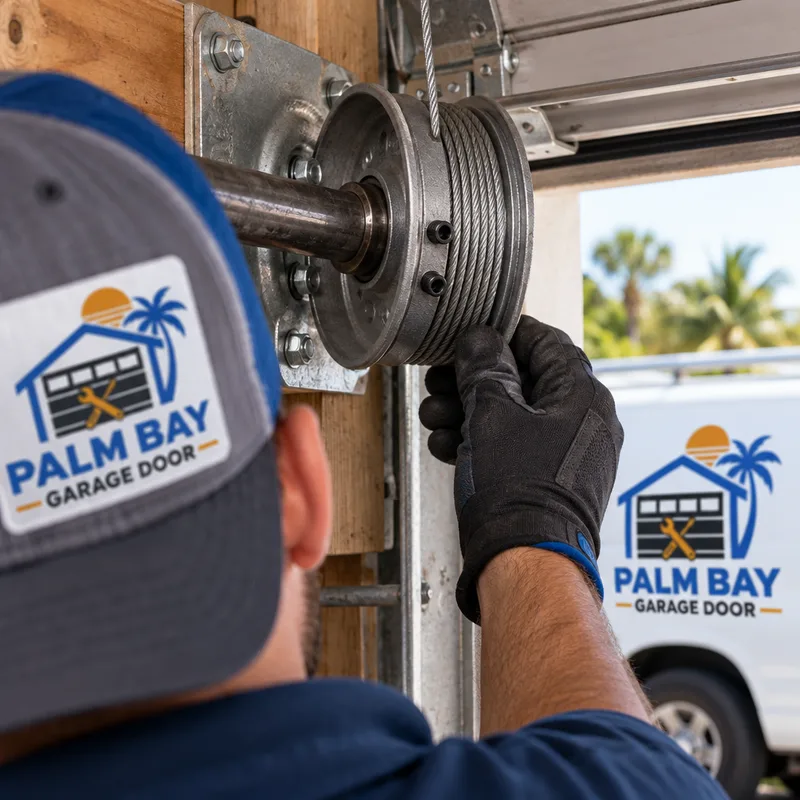
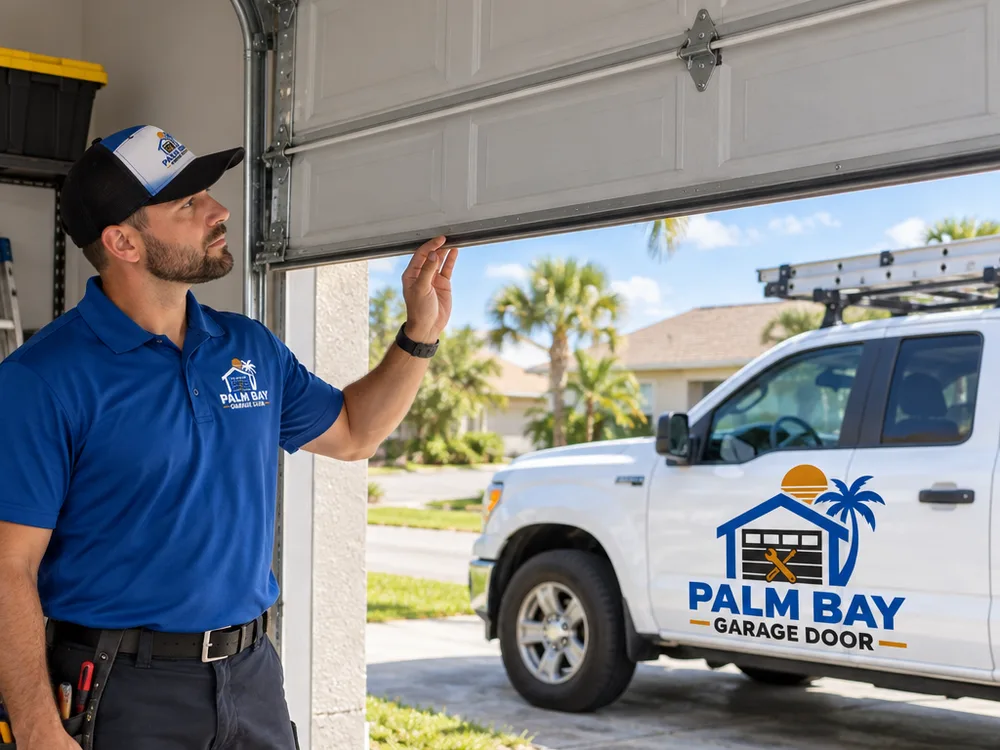
If the door is very heavy to lift by hand with the opener disconnected, or it won't stay up around mid-travel, the springs are not counterbalancing the door. Many openers stop or struggle because the door is out of balance, so a spring issue can look like an opener failure.
Yes. On a two-spring torsion system, one spring can break first, and the door may still lift slightly but will be crooked or extremely heavy. Contractors often check both springs' condition and sizing because mismatched or uneven springs can cause uneven cable tension and extra wear.
Have the door type, whether it's a sectional overhead door or another style, the approximate door height, and what you observed, such as a gap in the spring, a loud bang, the door stuck closed, or loose cables. If you can safely look, noting whether the spring is above the door or along the tracks helps the contractor plan the visit.
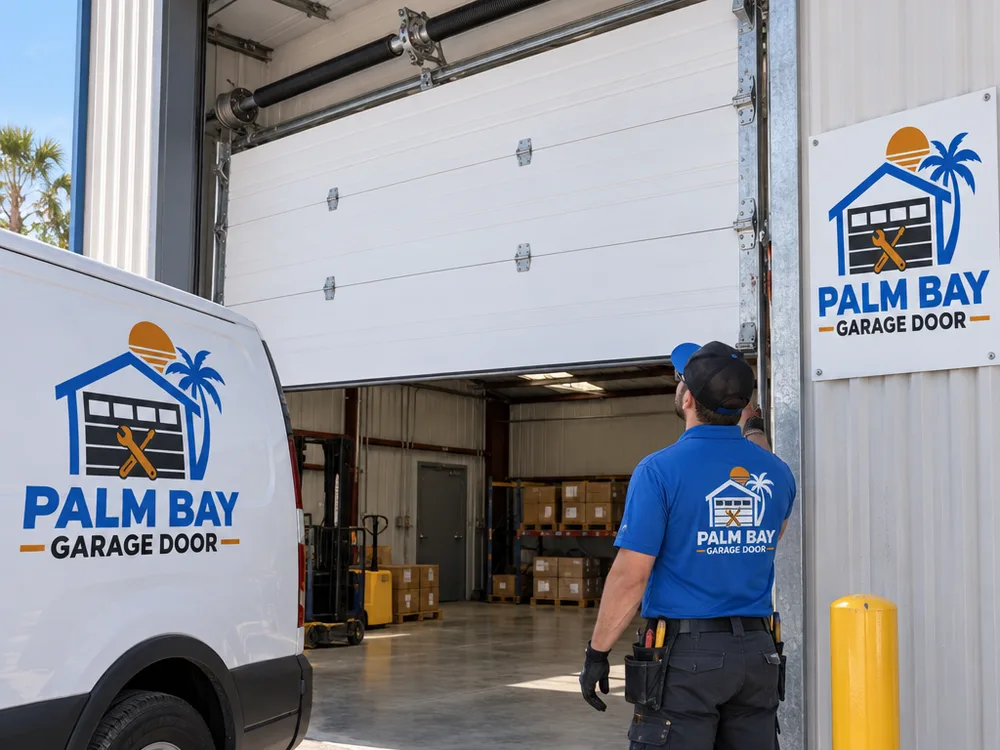
Commercial doors can use heavier springs, different lift types, and more demanding cycle use. The contractor may check the shaft, center bearing, end bearing plates, cable drums, and mounting points more closely because higher forces can amplify small alignment issues.
A door with a broken spring can be dangerous and can overload the opener. It's safer to leave the door closed and avoid pulling the release cord unless you have a plan for controlling the door's weight. The contractor you're connected with can explain the safest next step for your setup.
Yes. Balance is the functional goal of spring repair: the door should lift smoothly and stay near mid-travel without drifting. That balance helps protect the opener and reduces wear on rollers, hinges, and tracks.
Spring repair is sometimes all that's needed, but a broken spring can be a sign of broader wear like frayed cables, worn rollers, loose drums, or track issues. If you're also dealing with popping noises, a door that binds, or damaged panels, discuss the broader repair needs with the contractor during the call.
Explain whether it's a residential door or a commercial bay door, what the opener is doing, and what you noticed at the springs. We'll connect you with a local contractor in the Palm Bay and Melbourne area who can diagnose the setup and talk through the repair options with you.